
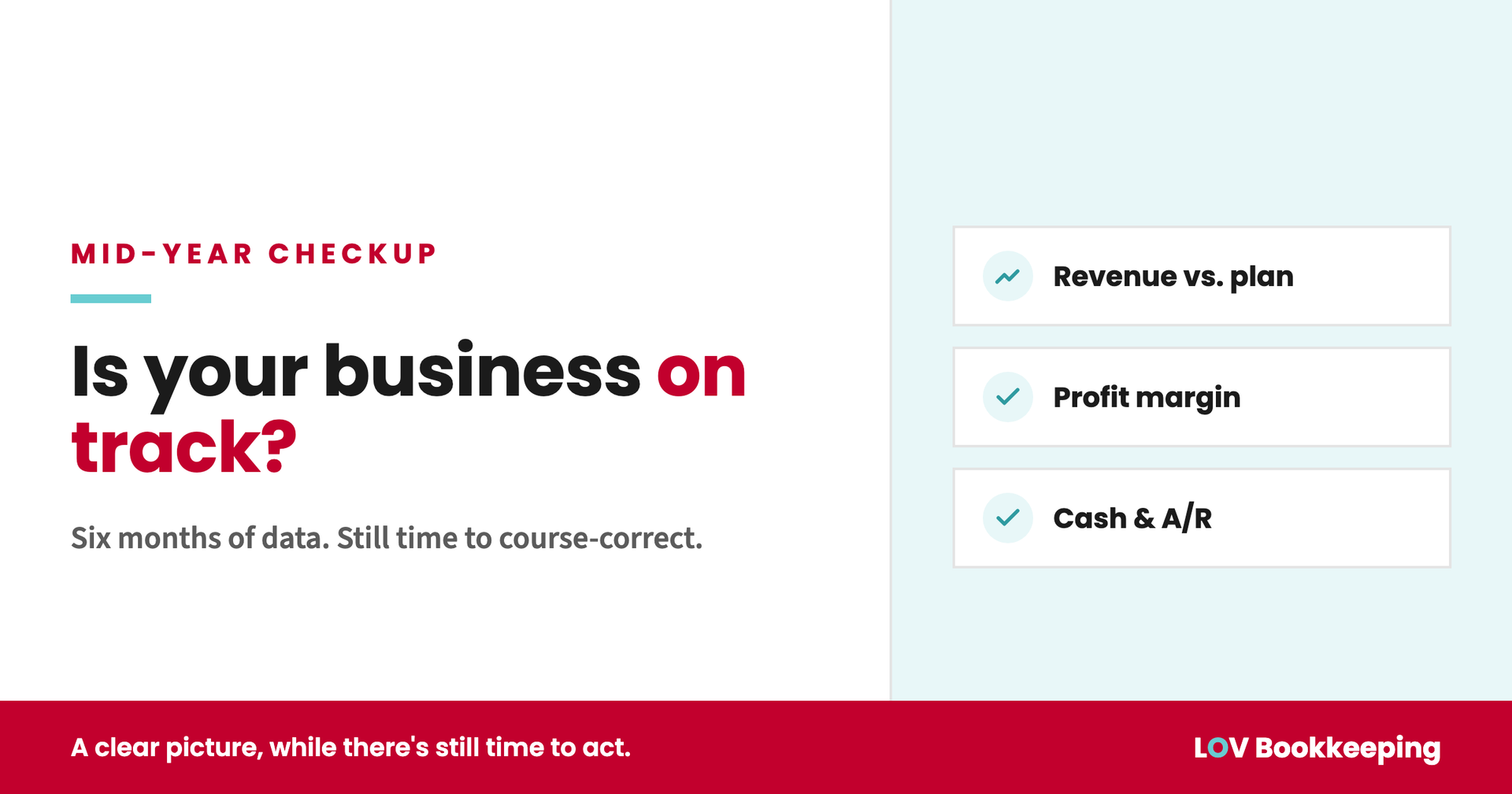
Mid-Year Financial Checkup: Is Your Business on Track?

July 17, 2026

We are halfway through the year. That makes July a good time to stop and ask a simple question: is your business actually on track for what you wanted in January?

Most owners set goals at the start of the year and then put their heads down and work. That is not a criticism. It is what running a business looks like. But six months in, you now have something you did not have in January: real numbers. A mid-year checkup is just taking an hour to look at them while there is still time to do something about what you find.
Why mid-year and not year-end
By December, the year is decided. If revenue is soft or expenses crept up, there is very little runway left to respond. In July you still have six full months. A small correction now compounds in your favor for the rest of the year. That is the whole point of checking in at the midpoint instead of waiting for the tax-season surprise.

What to actually look at
You do not need a complicated dashboard. A handful of numbers tells you most of the story:

Revenue against your plan. Compare the first six months to the goal you set, and to the same period last year. Are you ahead, behind, or about even?

Profit margin, not just revenue. Growing sales while keeping less of each dollar is a common trap. Look at what you actually kept after expenses, not just the top line.

Cash position. Profit on paper and cash in the bank are not the same thing. How many months of expenses could you cover right now if income paused?

Expenses that crept up. Subscriptions, fees, and vendor costs tend to grow quietly. Mid-year is a good moment to spot the ones that no longer earn their place.

Accounts receivable. Money your clients owe you is not helping you until it arrives. If invoices are aging past 30 or 60 days, that is a number worth addressing now.

Turning the review into action
A checkup only matters if it leads to a decision. Depending on what the numbers show, mid-year is the right time to revisit pricing, trim costs that are not pulling their weight, tighten up how you collect from clients, or adjust your estimated tax payments so there are no surprises in April.

This is also where current books earn their keep. If your financials are closed and accurate each month, this review takes an hour. If they are six months behind, you spend that hour just trying to figure out what the numbers are.

The bottom line
A mid-year checkup is not about judging the first half of the year. It is about giving yourself a clear picture and enough time to act on it. If you would like a second set of eyes on your numbers, we are glad to walk through them with you. There is no pressure either way.

June 22, 2026
Most business owners we talk to assume catch-up bookkeeping is the budget-friendly choice. Let the books sit, hand off a pile of statements once or twice a year, and pay for a single cleanup instead of an ongoing service. On paper that sounds reasonable. In practice it usually costs more.
May 15, 2026
Many small business owners receive financial reports every month… but never really use them. The reports get downloaded, glanced at briefly, and filed away until tax season. But financial reports are much more than paperwork—they’re decision-making tools. When you understand what your numbers are telling you, you can make smarter, more confident choices for your business. Here’s how to turn your financial reports into actionable insights. Your Profit & Loss Statement Shows What’s Working Your Profit & Loss Statement (P&L) tracks: Revenue Expenses Profitability This report helps answer important questions like: Are you actually making money? Which services or products are most profitable? Are expenses increasing too quickly? Reviewing your P&L monthly helps you spot trends early instead of reacting after problems grow. Your Balance Sheet Reveals Financial Stability Your Balance Sheet gives you a snapshot of: What your business owns (assets) What it owes (liabilities) Your equity position This report helps you understand the overall financial health of your business. For example: Too much debt may signal risk Strong cash reserves create flexibility Growing assets often indicate stability and growth Cash Flow Tells You Whether Your Business Can Breathe Profit does not always equal cash in the bank. Your cash flow shows: Money coming in Money going out Whether you can comfortably cover expenses Many profitable businesses still struggle because they don’t monitor cash flow carefully. Understanding this report helps you avoid surprises and plan ahead with confidence. Financial Reports Help You Make Smarter Decisions When your reports are accurate and up to date, they help guide decisions like: Hiring employees Increasing prices Cutting unnecessary expenses Expanding services Investing in equipment or marketing Instead of relying on guesswork or emotions, you’re making decisions based on real data. Consistency Creates Clarity Financial reports only become useful when they’re reviewed consistently. Monthly bookkeeping and regular financial reviews allow you to: Spot problems early Track progress toward goals Make adjustments quickly Good financial habits lead to better long-term business decisions. How LOV Bookkeeping Helps At LOV Bookkeeping, we believe bookkeeping is about more than recording transactions. We help small business owners: Understand their financial reports Identify trends and opportunities Gain clarity about their business performance Make informed, confident decisions Because when you understand your numbers, you can lead your business with confidence.
April 16, 2026
For many small business owners, doing your own bookkeeping feels like the responsible thing to do. It saves money, keeps you in control, and seems manageable, at least at first. But what most business owners don’t realize is that DIY bookkeeping often comes with hidden costs. Over time, those costs can add up to far more than hiring a professional. Let’s take a closer look at the real cost of doing your own books.