How Clean Books Protect You During Audits, Loans, and Funding
Most of the time, your books are for you. They tell you what you earned, what you spent, and what you can count on next month. Every so often, though, someone outside your business needs to trust your numbers too. A bank deciding on a loan. An auditor with questions. An investor or a buyer doing their homework.
In those moments, clean books stop being a convenience and become protection. The quality of your records is what stands between a routine process and an expensive problem.
When the bank is deciding whether to lend
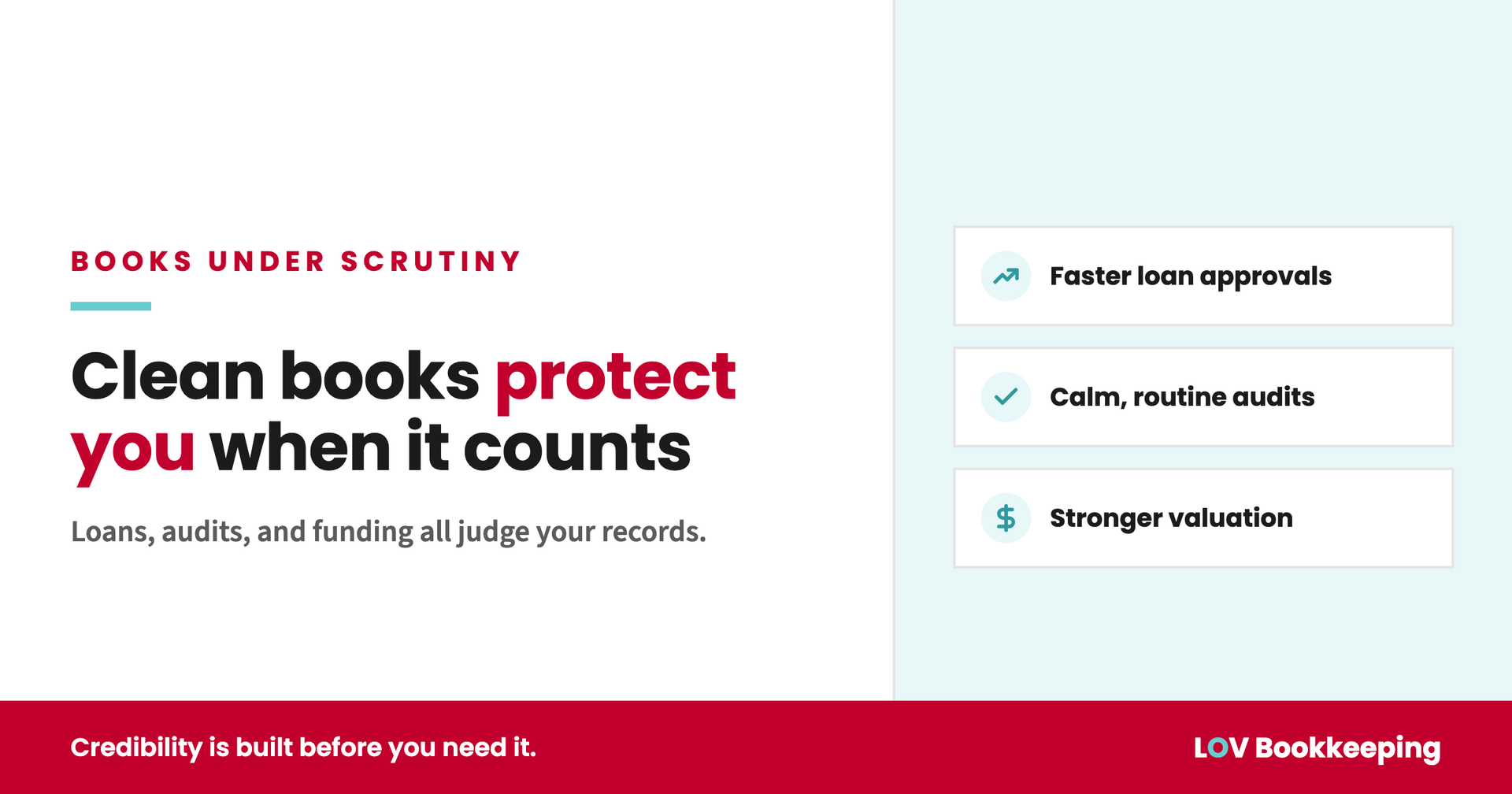
Apply for a loan or a line of credit and the lender will ask for financial statements, often two or three years of them, along with tax returns and bank statements. What they are really doing is checking whether your numbers hold together. Does the profit on your profit and loss statement match what actually landed in the bank? Do the tax returns line up with the books?
When everything reconciles, the review moves quickly and you look like a business that has its act together. That impression tends to show up in the terms you are offered. When the records are inconsistent or months behind, the lender asks for more documentation, offers less than you requested, or passes. Clean books do not guarantee a yes, but messy books make a no much more likely.
When a letter shows up from the IRS or an auditor
An audit notice is stressful no matter how good your records are. What changes is everything that happens next. If your books are reconciled and your receipts and statements are organized, an audit is mostly a matter of pulling documents that already exist. It is tedious, and it is manageable.
If your books are a guess, the same notice turns into weeks of reconstruction, and every gap you cannot explain is a place where the auditor can adjust the number against you. That holds for an IRS audit, and just as much for a sales tax review, an insurance audit, or a franchisor checking your reporting. Organized records are the cheapest insurance you can carry.
When you raise money or sell the business
If you ever bring on an investor or sell, the other side runs due diligence. They dig into your financials and verify what they can. Anything they cannot confirm, they discount. Sloppy books do not only slow a deal down. They can lower your valuation because a buyer prices in the risk of whatever might be hiding in the numbers.
You cannot build credibility overnight
Here is the part worth planning around. Every one of these situations looks backward. The bank wants two to three years of history. The auditor wants the period in question. The buyer wants a consistent track record. You cannot create any of that in the week you need it.
The businesses that move through these moments calmly are the ones whose books were already current, reconciled, and consistent for months before anyone asked. The protection is the ongoing habit, not a scramble at the end.
If you run a service business in Texas and a loan, a sale, or simply peace of mind is somewhere on your horizon, it is worth making sure your books would hold up to a closer look. We are glad to review where things stand, and there is no pressure either way.