Cash Flow vs. Profit: What Business Owners Get Wrong
Many small business owners assume that if their company is profitable, they must be financially healthy. Unfortunately, that’s not always true. One of the most common financial misunderstandings is confusing profit with cash flow.
While they are connected, they are not the same—and understanding the difference can protect your business from serious financial stress.
What Is Profit?
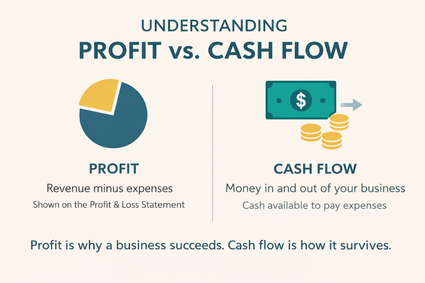
Profit is what’s left after you subtract expenses from revenue. It’s shown on your Profit & Loss Statement and tells you whether your business is earning more than it’s spending over a specific period.
If your revenue is higher than your expenses, you’re profitable. That’s great—but profit is only part of the story.
What Is Cash Flow?
Cash flow measures the actual movement of money in and out of your business. It shows how much cash you have available to pay bills, payroll, vendors, and yourself.
You can be profitable on paper and still struggle to pay your expenses if your cash flow is tight.
Why Businesses Get Into Trouble
Here are a few common situations where profit and cash flow don’t align:
- You made strong sales—but customers haven’t paid yet.
- You purchased inventory or equipment upfront.
- You paid off debt or large expenses in one month.
- You’re growing quickly and reinvesting heavily.
In these cases, your Profit & Loss Statement may look healthy, but your bank account tells a different story.
Why Cash Flow Matters More Than You Think
Cash keeps your business operating day to day. Without consistent positive cash flow, even profitable businesses can struggle—or fail.
Strong cash flow management allows you to:
- Cover payroll confidently
- Pay vendors on time
- Invest in growth opportunities
- Avoid unnecessary debt
How to Improve Cash Flow
To strengthen your financial position:
- Send invoices promptly
- Follow up on overdue payments
- Monitor monthly expenses
- Review your financial reports regularly
- Work with a professional to forecast cash flow trends
Clarity Leads to Confidence
Understanding the difference between cash flow and profit gives you better control over your business. When you review both regularly, you can make informed decisions instead of reacting to surprises.
At LOV Bookkeeping, we help small business owners track not just profitability—but liquidity—so they can grow with stability and confidence.
If you’re unsure whether your business is truly financially healthy, let’s take a closer look together.