What to Prepare for Year-End Bookkeeping

November 12, 2025

A Practical Guide for Small Business Owners

As the end of the year approaches, small business owners have more than holiday sales and schedules on their minds. It’s also time to get the books in order. Year-end bookkeeping isn’t just about closing the books — it’s about setting your business up for a strong start in the new year.


Here’s a practical checklist to help you prepare for year-end bookkeeping and avoid last-minute stress.


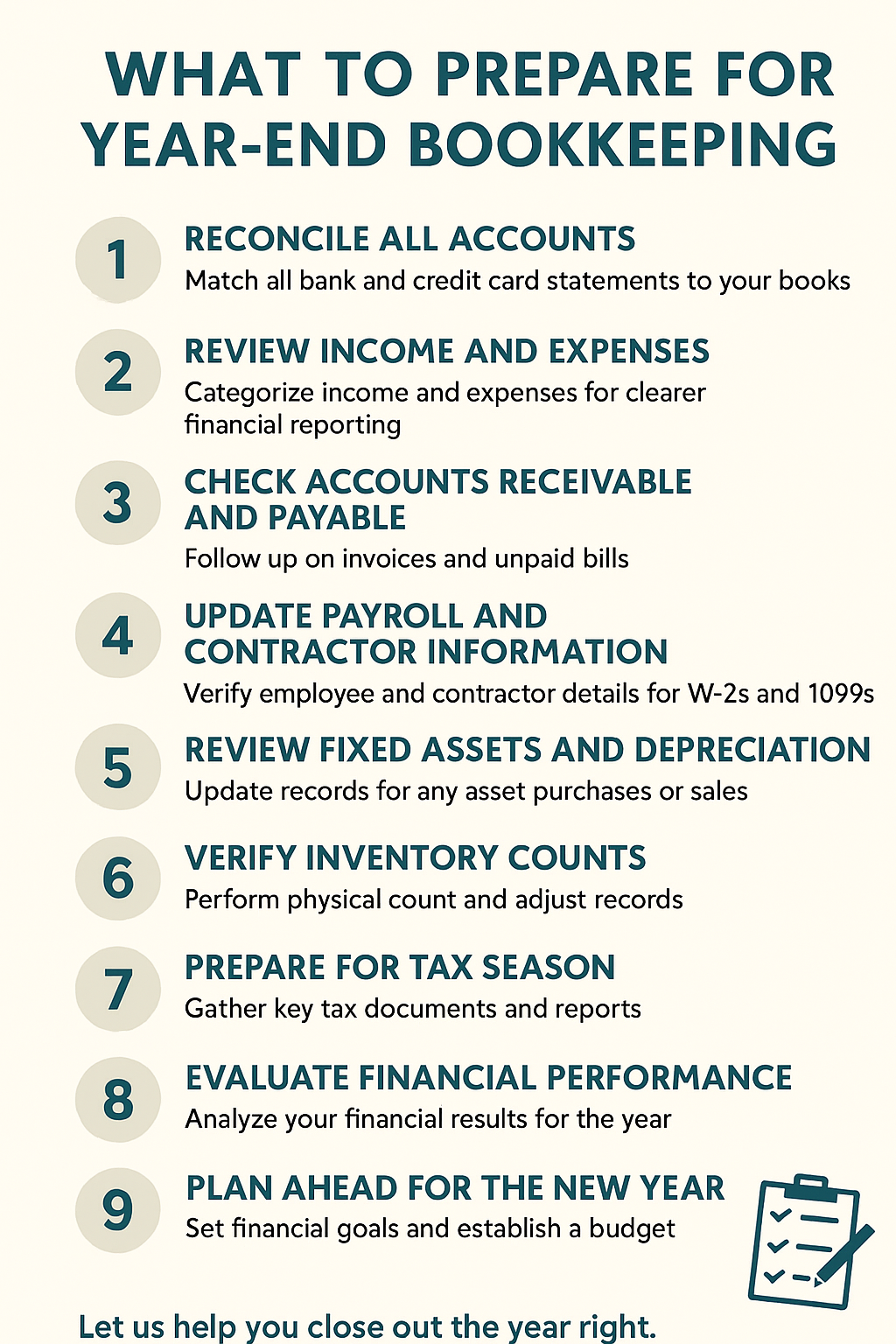
1. Reconcile All Accounts


Make sure your bank accounts, credit cards, and loans match the balances on your statements. Reconciling ensures every transaction is recorded properly and helps identify missing entries or duplicate expenses. It’s one of the simplest — but most crucial — steps in ensuring your books are accurate.


2. Review Income and Expenses


Take time to categorize all income and expenses correctly. This step is key for:

Understanding your business’s profitability

Identifying deductible expenses

Avoiding surprises when tax time rolls around

If you’ve been using general categories or “miscellaneous” labels, now’s the time to clean those up for a clearer financial picture.


3. Check Accounts Receivable and Payable


Follow up on outstanding invoices and unpaid bills. Collecting what’s owed and paying what you owe keeps your financial reports clean and helps improve your cash flow. It’s also a good time to evaluate if your payment terms need adjusting for next year.


4. Update Payroll and Contractor Information


Ensure all employee and contractor information is current and accurate. You’ll need correct addresses and tax details for W-2s and 1099s. Review any bonuses, reimbursements, or benefits to confirm they’ve been properly recorded.


5. Review Fixed Assets and Depreciation


If you purchased or sold equipment, vehicles, or property this year, update your fixed asset list (yes, you should have a list). Properly tracking these ensures your depreciation is recorded correctly — which can significantly affect your tax deductions.


6. Verify Inventory Counts


For businesses that carry inventory, do a physical count and compare it to what’s in your system. Adjust for shrinkage, spoilage, or discrepancies. Accurate inventory counts directly impact your cost of goods sold and your bottom line.


7. Prepare for Tax Season


Gather key tax documents and reports now, such as:

  • Profit & Loss Statement
  • Balance Sheet
  • General Ledger
  • Payroll Reports
  • Receipts for major purchases or deductions
  • Having these ready makes tax filing faster — and can reduce the stress that comes with deadlines.

8. Evaluate Financial Performance


Once your books are up-to-date, step back and analyze your numbers. How did your revenue compare to last year? Which expenses grew, and why? This is your chance to identify what’s working and what needs adjustment before the new year begins.


9. Plan Ahead for the New Year


Finally, use this momentum to set financial goals. Whether it’s improving cash flow, increasing profit margins, or simply keeping more organized books — start planning now. A clean close this year sets the foundation for smoother, more informed decisions next year.


Need Help Closing Out the Year?


Year-end bookkeeping can be overwhelming, especially when you’re trying to wrap up projects and plan for the holidays. At LOV Bookkeeping, we help small business owners close their books accurately and efficiently — so you can focus on growth, not paperwork.


Let’s make sure your year ends right.

Book a no obligation consultation with us today.

May 15, 2026
Many small business owners receive financial reports every month… but never really use them. The reports get downloaded, glanced at briefly, and filed away until tax season. But financial reports are much more than paperwork—they’re decision-making tools. When you understand what your numbers are telling you, you can make smarter, more confident choices for your business. Here’s how to turn your financial reports into actionable insights. Your Profit & Loss Statement Shows What’s Working Your Profit & Loss Statement (P&L) tracks: Revenue Expenses Profitability This report helps answer important questions like: Are you actually making money? Which services or products are most profitable? Are expenses increasing too quickly? Reviewing your P&L monthly helps you spot trends early instead of reacting after problems grow. Your Balance Sheet Reveals Financial Stability Your Balance Sheet gives you a snapshot of: What your business owns (assets) What it owes (liabilities) Your equity position This report helps you understand the overall financial health of your business. For example: Too much debt may signal risk Strong cash reserves create flexibility Growing assets often indicate stability and growth Cash Flow Tells You Whether Your Business Can Breathe Profit does not always equal cash in the bank. Your cash flow shows: Money coming in Money going out Whether you can comfortably cover expenses Many profitable businesses still struggle because they don’t monitor cash flow carefully. Understanding this report helps you avoid surprises and plan ahead with confidence. Financial Reports Help You Make Smarter Decisions When your reports are accurate and up to date, they help guide decisions like: Hiring employees Increasing prices Cutting unnecessary expenses Expanding services Investing in equipment or marketing Instead of relying on guesswork or emotions, you’re making decisions based on real data. Consistency Creates Clarity Financial reports only become useful when they’re reviewed consistently. Monthly bookkeeping and regular financial reviews allow you to: Spot problems early Track progress toward goals Make adjustments quickly Good financial habits lead to better long-term business decisions. How LOV Bookkeeping Helps At LOV Bookkeeping, we believe bookkeeping is about more than recording transactions. We help small business owners: Understand their financial reports Identify trends and opportunities Gain clarity about their business performance Make informed, confident decisions Because when you understand your numbers, you can lead your business with confidence.
April 16, 2026
For many small business owners, doing your own bookkeeping feels like the responsible thing to do. It saves money, keeps you in control, and seems manageable, at least at first. But what most business owners don’t realize is that DIY bookkeeping often comes with hidden costs. Over time, those costs can add up to far more than hiring a professional. Let’s take a closer look at the real cost of doing your own books. 
March 23, 2026
For many small business owners, tax season feels stressful, confusing, and rushed. Documents are being gathered at the last minute, questions pop up unexpectedly, and everyone is trying to meet deadlines. But the truth is, tax season doesn’t have to feel that way.  A lot of the stress that happens in March and April could be avoided with better bookkeeping habits throughout the year. As bookkeepers, we see the same patterns every year, and there are a few things we wish every business owner understood before tax season arrives.