Understanding Your Numbers Before Year-End
Understanding Your Numbers Before Year-End
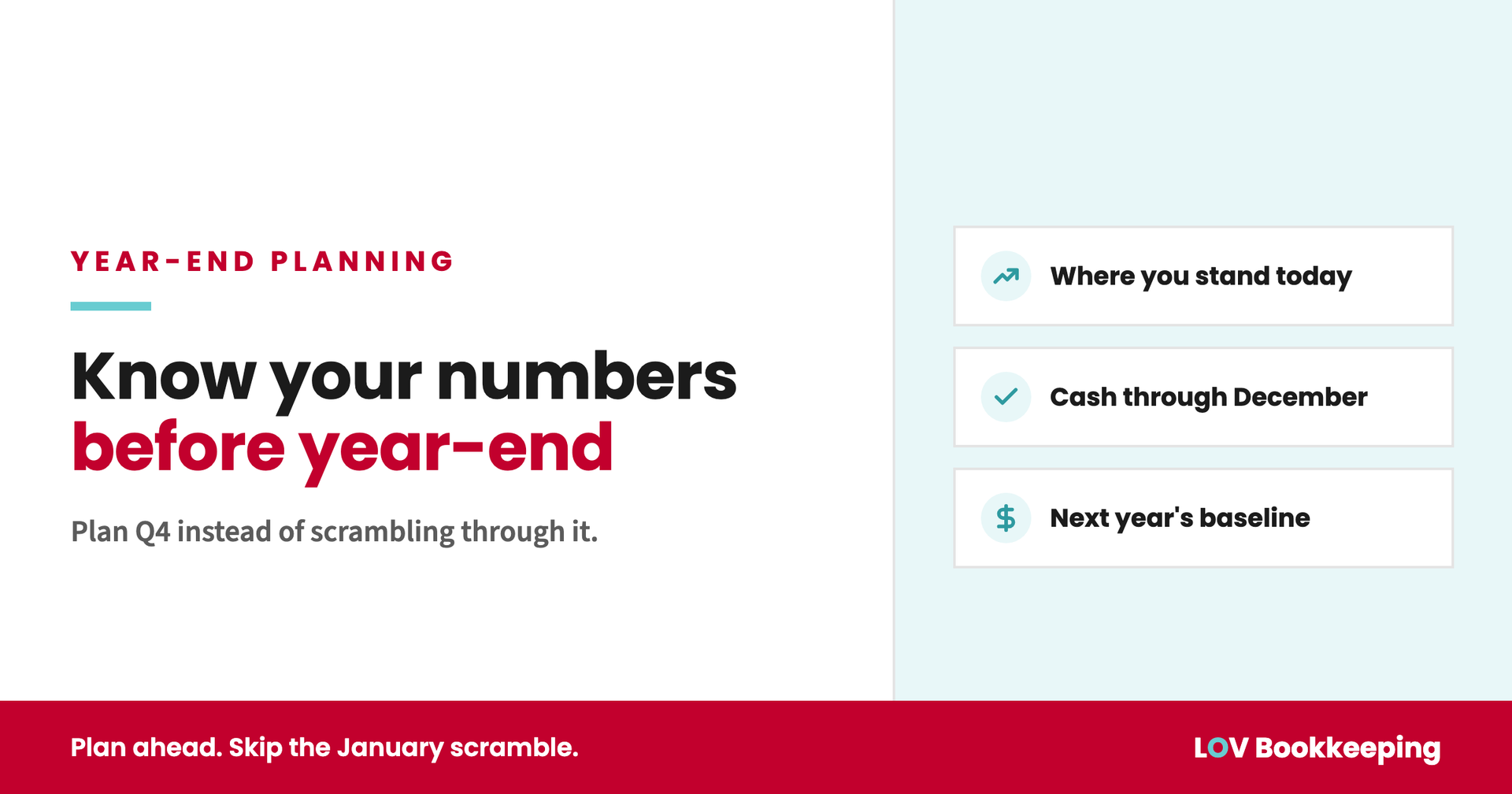
Most business owners take a hard look at their numbers in January, when the year is over and there is nothing left to change. October is a better time. You still have a full quarter to act, and the decisions you make now show up in this year's results instead of next year's regrets.
The goal is simple: know where you stand while there is still time to do something about it.
Start by knowing where you actually stand
Before anything else, confirm your books are current through September. Every decision from here depends on the numbers being right, so if you are behind, catching up is step one.
Then compare year to date against the same period last year, and against whatever plan or goal you set in January. You are looking for the story behind the totals: Is revenue up or down? Did your margin hold? Which expenses grew faster than sales?
Check the numbers that drive Q4 decisions
You do not need a dozen reports. A handful of numbers tell you most of what you need:
Year-to-date revenue and profit, compared to last year
- Cash on hand, and what is coming in and going out through December
- Accounts receivable: who owes you, and how old those balances are
- Payroll and contractor totals, so year-end filings are not a surprise
Give your CPA real numbers to work with
Q4 is when year-end tax decisions get made, such as equipment purchases or retirement contributions. Those calls belong to your CPA. What your bookkeeper can do is make sure your books are current and accurate, so your CPA is planning from real numbers instead of estimates. A good CPA can only be as good as the information handed to them.
If your CPA has asked for updated financials and you are not sure they are ready, that is worth fixing now, not in the first week of January.
Plan your cash through the holidays
Every business has a few predictable Q4 pressures: bonuses, extra inventory, slower-paying customers, and the usual holiday swings. A simple cash forecast through December lets you see those coming. Knowing in October that November will be tight is a planning problem. Finding out in November is a scramble.
Use this year to set up next year
This year's actual numbers are the best starting point for next year's budget. Instead of guessing at goals, you can build them on what really happened: what you earned, what you spent, and where the money went. It is also the right time to collect W-9s from any contractors you will need to issue 1099s to, since chasing that paperwork in January is no fun for anyone.
A quick Q4 checklist
Books reconciled through September
- Year-to-date profit and loss reviewed against last year
- Cash forecast built through December
- W-9s collected for every contractor
- Updated financials sent to your CPA
- A first draft of next year's budget
None of this is complicated. It just works better when it happens in October, with time to spare.
If you run a service business in Texas and want a second set of eyes on where your numbers stand heading into year-end, we are glad to take a look. There is no pressure either way.