Year-End Bookkeeping Checklist for Small Business Owners
Year-end goes better when you spread it over a couple of months instead of cramming it into the first week of January. The owners who sail through tax season are rarely the ones who work hardest in January. They are the ones who started in November.
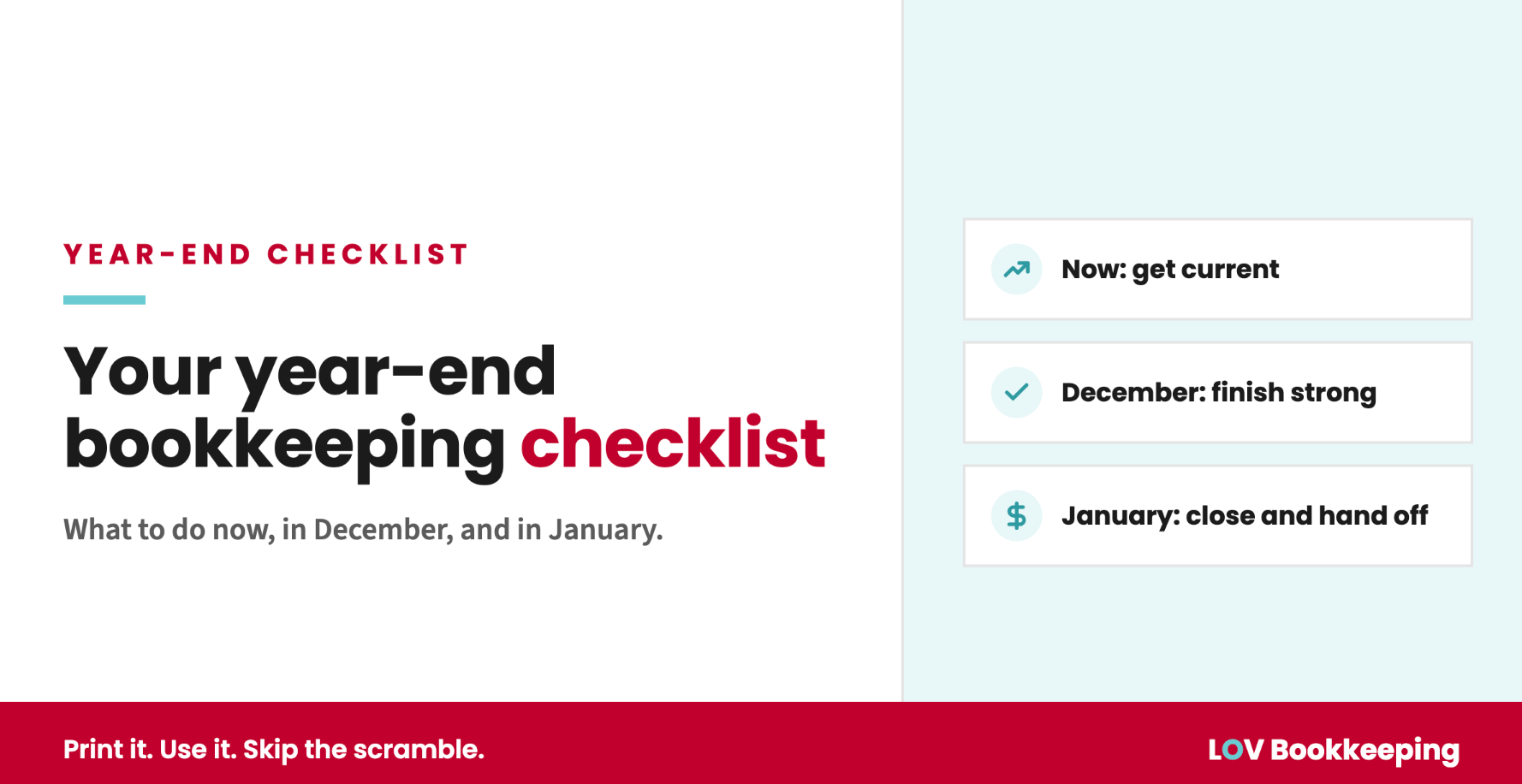
This year-end bookkeeping checklist breaks the work into four stages, so you always know what to do next. Download the one-page version, keep it on your desk, and check items off as you go.
New to year-end planning? Start with Understanding Your Numbers Before Year-End, then come back here for the step-by-step.
Now through mid-November: get current
Everything else on this list depends on your books being up to date, so start here.
- Reconcile every bank, credit card, and loan account through October.
- Clear out anything sitting in "uncategorized" or "ask my accountant."
- Compare year-to-date profit and loss with last year, and note anything that looks off.
- Follow up on overdue customer invoices, and review what you owe vendors.
- Confirm payroll is set up correctly and your payroll tax deposits are current.
Thanksgiving week to early December: collect and confirm
This is the paperwork stage. It is much easier to gather now than to chase in January.
- Collect a W-9 from every contractor you have paid or expect to pay. Your CPA can tell you the current 1099 reporting threshold.
- Gather year-end statements for credit cards, loans, and leases.
- Write down any equipment or large purchases you are considering, and talk to your CPA before you buy. Those decisions are theirs to guide.
- Track down missing receipts for larger expenses.
- If you carry inventory, schedule your count.
December: finish strong
- Send your final invoices and decide on your billing cutoff.
- Run your last payroll of the year and make sure bonuses are recorded correctly.
- Record owner contributions and draws accurately.
- Keep receipts and acknowledgment letters for charitable gifts so your CPA has them.
- Back up your books and key financial files.
- If you collect sales tax, confirm your filing frequency and put the December return on your calendar.
January: close and hand off
- Reconcile December and close the year.
- Issue W-2s and 1099s by the end of January. Confirm the exact date with your CPA.
- Send your CPA a clean year-end package.
- Build next year's budget from this year's real numbers.
What to send your CPA
- Year-end profit and loss statement and balance sheet
- Bank, credit card, and loan statements as of December 31
- Payroll summaries and contractor payment totals
- A list of equipment and large purchases made during the year
- Inventory counts, if you carry inventory
- Accounts receivable and accounts payable aging reports
- Notes on any unusual transactions
Clean records help in other ways too. If a lender, an auditor, or a buyer ever asks questions, you want the answers ready. We cover that in How Clean Books Protect You During Audits, Loans, and Funding.
You do not have to do it alone
If your books are behind, or you are not sure where to start, that is exactly what we help with. We work with small business owners across Magnolia, Montgomery, and the surrounding area of Texas, and we are glad to look at where things stand heading into year-end. There is no pressure either way.