The Value of a Bookkeeper

April 24, 2024

I recently gave a presentation clarifying the different roles of a CPA, Accountant, and Bookkeeper. For most people this can be a confusing subject and even I struggle sometimes with trying to define the lines the divide them. Suffice it to say that all tend to venture into each others space and there is some overlap.

However, today I want to focus on what value a good bookkeeper can bring to your business. If you are trying to grow, focusing on generating more revenue, the last thing you want to do is lose momentum while trying to figure out the accounting for your business. So, find a good bookkeeper, like us, who can help you! Here is a short list of some areas that bookkeepers can help:


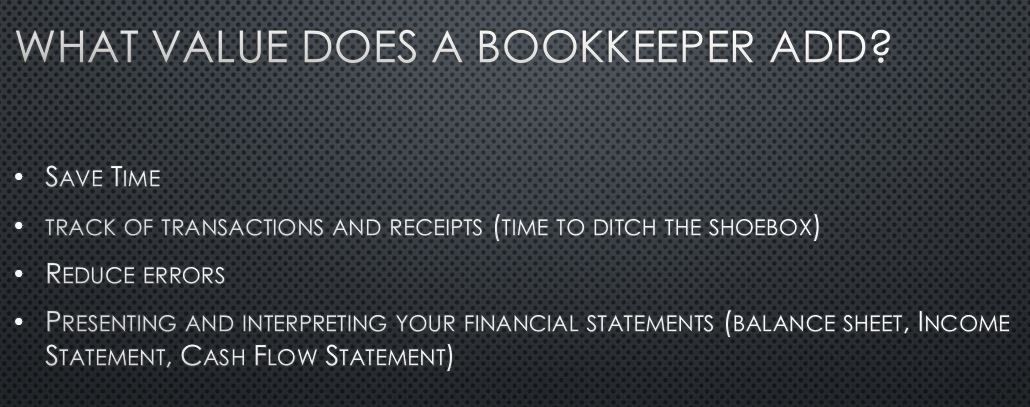
  • They Save you time - Unless you are a bookkeeper, you’re probably spending too much time doing it.


  • They Track transactions and receipts - A bookkeeper should be able to help you set up systems and processes to keep track of your receipts in case you need to present them in the future, such as in an audit situation.


  • They help to Reduce errors - Categorization errors are the biggest issue when it comes tax time. If you are entering transactions incorrectly, this can cause major problems for your business.


  • They assist in Financial statement preparation - Financial statements tell the story of how your business is doing financially. Banks, shareholders, and other outside parties will be very interested in these statements. The balance sheet shows the book value of a business. The income statement shows a business’s earnings over a given period of time. The cash flow statement shows how the company is financing their operations; where cash is coming from and where it’s going.


A client that I had been working with for 3 years, decided to sell her company. We focused our bookkeeping efforts and advice on those areas that add value from an accounting standpoint when selling a business, profit. She was able to sell for an amount she was happy with upon closing and when she starts her next venture, we’ll be there to help!

May 15, 2026
Many small business owners receive financial reports every month… but never really use them. The reports get downloaded, glanced at briefly, and filed away until tax season. But financial reports are much more than paperwork—they’re decision-making tools. When you understand what your numbers are telling you, you can make smarter, more confident choices for your business. Here’s how to turn your financial reports into actionable insights. Your Profit & Loss Statement Shows What’s Working Your Profit & Loss Statement (P&L) tracks: Revenue Expenses Profitability This report helps answer important questions like: Are you actually making money? Which services or products are most profitable? Are expenses increasing too quickly? Reviewing your P&L monthly helps you spot trends early instead of reacting after problems grow. Your Balance Sheet Reveals Financial Stability Your Balance Sheet gives you a snapshot of: What your business owns (assets) What it owes (liabilities) Your equity position This report helps you understand the overall financial health of your business. For example: Too much debt may signal risk Strong cash reserves create flexibility Growing assets often indicate stability and growth Cash Flow Tells You Whether Your Business Can Breathe Profit does not always equal cash in the bank. Your cash flow shows: Money coming in Money going out Whether you can comfortably cover expenses Many profitable businesses still struggle because they don’t monitor cash flow carefully. Understanding this report helps you avoid surprises and plan ahead with confidence. Financial Reports Help You Make Smarter Decisions When your reports are accurate and up to date, they help guide decisions like: Hiring employees Increasing prices Cutting unnecessary expenses Expanding services Investing in equipment or marketing Instead of relying on guesswork or emotions, you’re making decisions based on real data. Consistency Creates Clarity Financial reports only become useful when they’re reviewed consistently. Monthly bookkeeping and regular financial reviews allow you to: Spot problems early Track progress toward goals Make adjustments quickly Good financial habits lead to better long-term business decisions. How LOV Bookkeeping Helps At LOV Bookkeeping, we believe bookkeeping is about more than recording transactions. We help small business owners: Understand their financial reports Identify trends and opportunities Gain clarity about their business performance Make informed, confident decisions Because when you understand your numbers, you can lead your business with confidence.
April 16, 2026
For many small business owners, doing your own bookkeeping feels like the responsible thing to do. It saves money, keeps you in control, and seems manageable, at least at first. But what most business owners don’t realize is that DIY bookkeeping often comes with hidden costs. Over time, those costs can add up to far more than hiring a professional. Let’s take a closer look at the real cost of doing your own books. 
March 23, 2026
For many small business owners, tax season feels stressful, confusing, and rushed. Documents are being gathered at the last minute, questions pop up unexpectedly, and everyone is trying to meet deadlines. But the truth is, tax season doesn’t have to feel that way.  A lot of the stress that happens in March and April could be avoided with better bookkeeping habits throughout the year. As bookkeepers, we see the same patterns every year, and there are a few things we wish every business owner understood before tax season arrives.